

Google has over 200 ranking factors. Links are among the three most important. Link building is the process of getting other websites to link to your website. Each link acts as a vote of confidence in your content, and Google uses those votes to decide which pages deserve to rank near the top of search results.
This guide explains what link building is in SEO, why it matters for rankings, what makes some links far more valuable than others, and how to start building your first links without risking a Google penalty.
What Is Link Building? (The Simple Definition)
What Is a Backlink?
A backlink is a hyperlink on one website that points to a page on another website. When a cooking blog includes a link to your recipe tool, that’s a backlink. When a news site cites your original research, that’s a backlink too.
Backlinks differ from internal links. An internal link connects two pages on the same website — for example, your homepage linking to your pricing page. A backlink comes from an entirely separate domain. In SEO, it’s backlinks that carry ranking weight, not internal links (though internal linking still matters for distributing authority within your own site).
The word “external link” can cause confusion. From your site’s perspective, an external link is one you send to another website. A backlink is one you receive. Link building focuses on earning the latter.
What Is Link Building in SEO?
Link building is the deliberate effort to acquire backlinks from other websites to your own. The goal is to increase your site’s authority in the eyes of search engines and, as a result, improve your rankings in organic search.
Not all link building is active outreach. Some links you earn without asking — because your content is genuinely useful and someone references it naturally. SEOs sometimes call this “link earning.” Other links come through specific tactics: reaching out to site owners, creating guest articles, or pitching your data to journalists. Both approaches are legitimate. The distinction matters because Google favors links acquired through genuine merit over links manufactured purely for SEO purposes.
Why Is Link Building Important for SEO?
How Google Uses Links as a Ranking Signal
Google’s founders, Sergey Brin and Larry Page, built the original search engine on a single insight: a page that many other pages link to is probably more authoritative than a page that few do. They formalized this in their 1998 Stanford paper as the PageRank algorithm.
The idea mirrors academic citation — a research paper cited by 500 other papers carries more weight than one cited by three. Google adapted that model to the web, treating each link as a vote. The more credible votes a page collects, the more authority it accumulates, and the better it tends to rank.
Google has since confirmed that links remain one of its top three ranking factors, alongside content relevance and technical quality. Authority passes from one page to another through links — SEOs call this “link equity.” A link from a trusted, high-traffic domain delivers more equity than a link from an obscure, rarely-visited one.
What Happens to Websites That Ignore Link Building
A site with strong content but no backlinks typically struggles to rank for any keyword that has real competition. Search engines have no external confirmation that the site is authoritative. The content may be excellent, but without third-party signals, Google has little reason to surface it above competitors that have both quality content and earned links.
Link authority also compounds over time. A site that has been building links consistently for three years will outrank a newer site even when the newer site has better on-page content, simply because the older site has accumulated more external endorsements. This compounding effect is one reason starting link building early matters — even at a small, sustainable pace.
The Role of Links in Domain Authority and Page Authority
Moz developed Domain Authority (DA) and Page Authority (PA) as third-party metrics to approximate how strong a site’s link profile is. Ahrefs offers a similar metric called Domain Rating (DR). Both give you a 0–100 score based primarily on the quantity and quality of backlinks pointing to the site.
These are not Google metrics. Google uses its own internal signals, and neither DA nor DR directly influences rankings. They are useful proxies, however, when evaluating link prospects. A site with DA 60 and real organic traffic is a more credible linking source than a site with DA 20 and no audience. When building links, prioritize sites with high authority scores and demonstrable real-world readership.
What Makes a Backlink Valuable (or Worthless)?

Relevance — Does the Linking Site Match Your Topic?
A link from a website that covers the same subject as yours carries more SEO weight than a link from an unrelated site. If you run a fitness equipment store, a link from a personal training blog is more valuable than the same link from an automotive repair site — even if the automotive site has higher traffic.
Relevance tells Google that the link is contextually meaningful. Sites that link to you should be doing so because your content genuinely relates to what their readers care about.
Authority — Is the Linking Domain Trustworthy?
One link from a respected publication often outperforms dozens of links from low-quality sites. Google weighs the trustworthiness of the linking domain heavily. Links from major news outlets, government sites (.gov), or university domains (.edu) tend to carry the most weight because those domains have earned authority through years of credible, frequently-cited content.
When prospecting for link opportunities, check the domain’s authority score in Ahrefs or Semrush, but also check its actual organic traffic. A site with a high DR but almost no real visitors may have inflated its metrics through link manipulation.
Dofollow vs. Nofollow Links — What Is the Difference?
Most links on the web are “dofollow” by default — they pass link equity from the linking page to the linked page. A nofollow link includes an HTML attribute (`rel=”nofollow”`) that was originally designed to tell Google: “don’t pass ranking credit through this link.”
In September 2019, Google changed how it handles nofollow. Instead of treating it as a hard rule, Google now treats nofollow as a “hint.” This means Google may choose to count some nofollow links when evaluating authority. The practical effect: nofollow links from authoritative sources (major news sites, Wikipedia) still carry indirect value, even if not full equity.
Two other link attributes also exist: `rel=”sponsored”` for paid or affiliate links, and `rel=”ugc”` for user-generated content like forum posts and blog comments. Google typically discounts both. When building links, dofollow placements on genuine editorial pages remain the primary target.
Anchor Text — Why the Clickable Words Matter
Anchor text is the visible, clickable text of a hyperlink. When a site links to your page using the anchor text “best running shoes for flat feet,” that tells Google something specific about the linked page’s topic.
A natural backlink profile includes varied anchor text: some branded mentions (your company name), some generic phrases (“click here,” “this article”), and some descriptive keywords. Problems arise when a large share of your backlinks use the same exact commercial keyword phrase. Google’s Penguin algorithm update in 2012 targeted this pattern specifically. An over-optimized anchor text profile can attract algorithmic scrutiny rather than ranking benefit.
The Main Link Building Strategies (For Beginners)
Five strategies work well for sites at the beginning of their link building journey. Each differs in effort and typical outcome.
1. Content-Led Link Earning
Create content so useful that other sites reference it without prompting. Original research, free tools, comprehensive guides, and data-driven statistics pages all attract links naturally. Ahrefs publishes regular studies on search data that earn thousands of backlinks each year because their findings are cited by other SEO writers who need to reference the numbers. Your content doesn’t need to be that ambitious — a niche-specific statistic page or a thorough how-to guide can attract consistent passive links within your industry.
2. Guest Posting
Write an article for another website in your niche and include a link back to your site within the content. Guest posting works when placed on genuinely editorial sites with real audiences. The host site gets useful content; you get a backlink. Google’s guidelines say guest posting purely for links is against the rules — the content must add real value to the host site’s readers, not just serve as a vehicle for a link.
3. Broken Link Building
Find links on relevant websites that point to pages returning a 404 (page not found) error. Contact the site owner, let them know the link is broken, and suggest your content as a replacement. Tools like Ahrefs and Screaming Frog identify broken links within competitor backlink profiles and resource pages. This tactic tends to produce higher response rates than cold link requests because you’re helping the site owner fix an actual problem.
4. Digital PR and Brand Mentions
Pitch journalists and bloggers with original data, industry surveys, or expert commentary. When your data appears in a published article, you earn an editorial backlink — often from a high-authority news domain. Services like Qwoted and Featured connect experts with journalists looking for sources (replacing HARO after Cision shut it down in late 2023). If other sites mention your brand by name without linking to you, those unlinked mentions are candidates for outreach — contact the author and ask them to add a link.
5. Resource Page Link Building
Many websites maintain curated “resources” pages listing useful tools, guides, and articles in a specific niche. Find relevant ones in your field, check whether your content would genuinely fit alongside what’s already listed, and send a short, polite email suggesting your page. The competition is lower than editorial pitches, and placements on well-maintained resource pages often carry solid authority.
Link Building Tools Every Beginner Should Know
The right tools depend on where you are in your link building process. Here’s a practical overview organized by task.
Backlink Analysis Tools
These tools show you which sites are linking to you (and to your competitors):
- Google Search Console (free): The first place to check. Shows which sites Google has found linking to your domain. Limited in scope but free and directly from Google.
- Ahrefs Site Explorer: The most widely used paid tool for backlink data. Shows referring domains, anchor text distribution, DR of linking sites, and lost/gained links over time.
- Semrush Backlink Analytics: Strong competitor analysis; good for identifying gaps between your backlink profile and top-ranking competitors.
- Moz Link Explorer: Useful for Domain Authority checks and basic link auditing. The free version allows a limited number of queries per month.
- LinksToro: Helps you analyze the websites where you want to place your links.
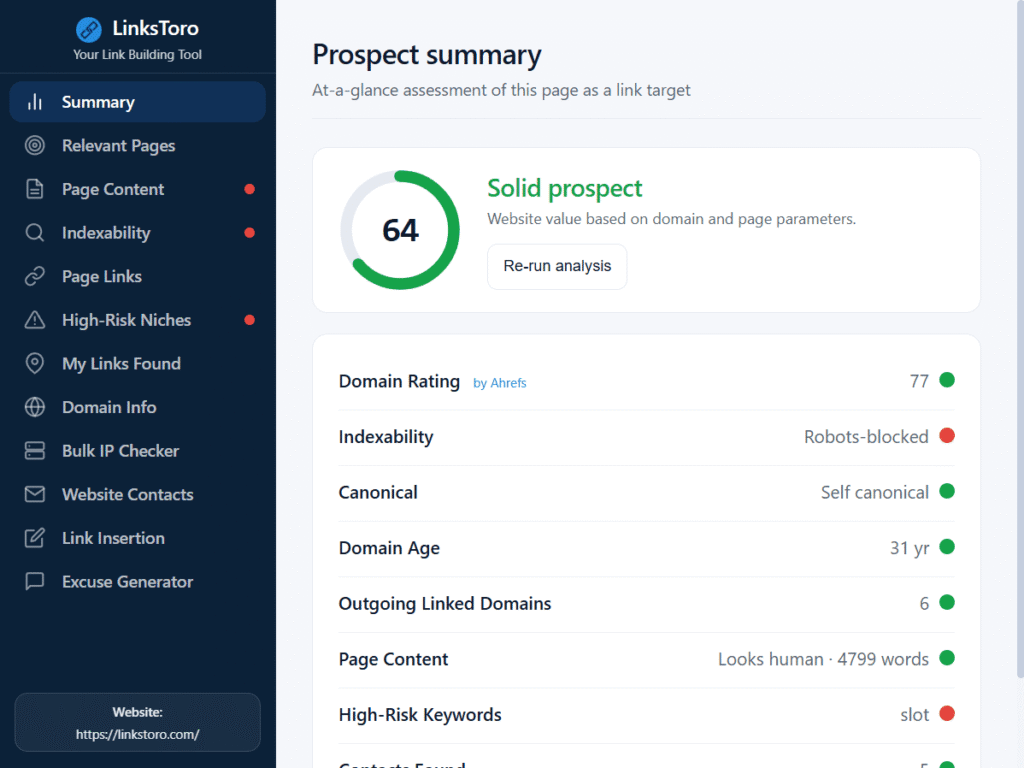
These four tools overlap significantly. Most beginners start with Google Search Console (free) and one paid tool, typically Ahrefs or Semrush.
Prospecting and Outreach Tools
Once you know who to contact, these tools handle the outreach side:
- Hunter.io: Finds email addresses associated with a website domain. Useful for identifying the right person to contact when pursuing a link placement.
- BuzzStream: A CRM built for link building outreach. Tracks which sites you’ve contacted, their responses, and the status of each placement.
- Pitchbox: A more advanced option combining prospect discovery, automated outreach sequences, and performance tracking. Better suited for campaigns at higher volume.
Free Tools for Getting Started
Before spending money on paid subscriptions, start with these:
Google Search Console — see your current inbound links and track ranking changes
Ahrefs Webmaster Tools — a free tier of Ahrefs that shows your own site’s backlinks and organic keywords
These free tools give you enough data to begin prospecting and auditing your profile. Upgrade to a paid plan once you’re ready to analyze competitors at scale.
How to Start Link Building — A Beginner’s Action Plan
Many beginners stall because they don’t know where to start. This five-step sequence gives you a clear entry point regardless of your site’s size or industry.
Step 1 — Audit Your Existing Backlink Profile
Log into Google Search Console and go to “Links.” This shows the external sites currently linking to your domain and the pages they link to. You need this baseline before doing anything else. It tells you which of your pages already have authority, which have none, and whether any harmful-looking links are pointing at your site.
If your site is new and Search Console shows very few or no backlinks, that’s normal. It confirms you’re starting from scratch and need to build from the beginning.
Step 2 — Identify Your Link Building Goal
Decide what you want links to accomplish. Two common goals for beginners are:
Ranking a specific page: If you have one page targeting a high-value keyword and it’s sitting on page 2, concentrate links there first.
Building overall domain authority: If your site is new and needs a general authority boost, target your homepage and your most important content pages.
Set a realistic monthly target early on — for a new site, aiming for five high-quality links per month is achievable and sustainable.
Step 3 — Create One Piece of Link-Worthy Content
You cannot attract links to thin, generic pages. Before reaching out to anyone, publish at least one piece of content worth linking to. This might be an original industry survey, a comprehensive guide that covers a topic better than anything currently ranking, a free tool, or a collection of original statistics. Pick one and build it well. It becomes the asset you promote in outreach.
Step 4 — Start With the Easiest Wins
Your first links don’t need to come from major publications. Begin with lower-effort sources:
Partner and supplier sites: Ask business partners, suppliers, or associations you belong to for a link from their website.
Unlinked brand mentions: Search Google for your brand name. Find pages that mention you without linking to you and contact those authors.
Relevant directories: Submit to a small number of legitimate, curated directories in your industry. Avoid mass directory submissions.
Your own profiles: Ensure your social profiles, Google Business Profile, and any industry directories include a link back to your site.
These first links raise your baseline authority and give you data to work with before running larger campaigns.
Step 5 — Build Outreach Habits
Set aside consistent time each week for link building outreach — even 2–3 hours per week compounds significantly over months. Start with five personalized emails per week. Reference the specific page where you’d like a link placed, explain what your content adds for their readers, and keep the email short.
Track every outreach attempt in a spreadsheet: the site contacted, the contact name, the date, and the response. Expect a positive reply rate of 5–15% on cold outreach, according to industry data from BuzzStream. One follow-up email, sent 5–7 days after your first message, typically doubles that rate.
Links from credible, relevant sites signal to Google that your content deserves to be found. That signal builds over months, not weeks. A consistent approach — good content, targeted outreach, and gradual authority growth — produces results that compound in ways paid advertising cannot replicate. Start small, track what works, and expand from there.
Frequently Asked Questions
How many backlinks does a new website need to rank?
There’s no fixed number. Backlink requirements vary by keyword competitiveness. For a low-competition local or niche keyword, a site may rank with fewer than 10 referring domains. For a competitive national keyword, you may need hundreds. Check how many referring domains the current top-ranking pages have in Ahrefs or Semrush — that sets your realistic benchmark.
What is the difference between link building and link earning?
Link building is proactive — you reach out, pitch, or create placements deliberately. Link earning is passive — other sites link to you without any outreach because your content is genuinely valuable or widely cited. Both result in backlinks, and both are acceptable under Google’s guidelines. The distinction matters because Google’s policies prohibit links that are purely manufactured for SEO, regardless of whether money changes hands.
How long does it take to see results from link building?
Most sites see measurable ranking movement within 3–6 months of a consistent link building effort. Links from high-authority domains can show effects faster — sometimes within 4–8 weeks. For competitive keywords, however, sustained link acquisition over 6–12 months is typically needed before significant ranking gains appear.
What tools do beginners need to start link building?
Google Search Console (free) is the first tool to set up. It shows your current backlinks and tracks ranking changes. Ahrefs Webmaster Tools (also free) extends this with competitor data. Once you’re ready to invest in paid tools, Ahrefs or Semrush provide the backlink analysis and prospecting features needed to run systematic campaigns.
Leave a Reply